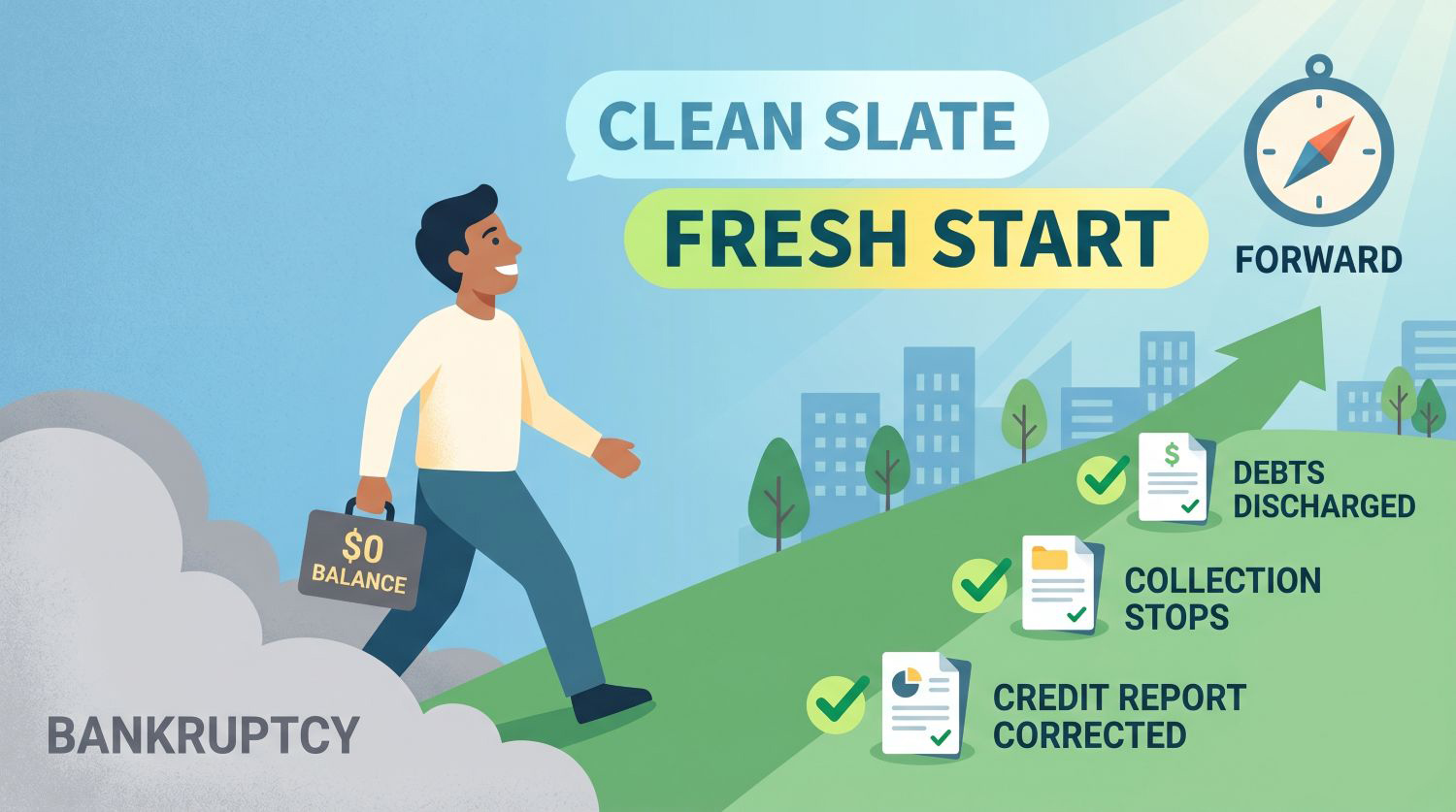
What to Do After a Bankruptcy Discharge
A bankruptcy discharge eliminates your legal obligation to pay certain debts and stops creditors from collecting. This protection, known as the discharge injunction, prohibits collection calls, lawsuits, and wage garnishments.
However, after discharge, some creditors may still incorrectly report that you owe the debt. If this happens, you have rights.
What Should Happen After Discharge
Once your discharge is entered:
Debts should show a $0 balance
Accounts should be marked “included in bankruptcy”
Creditors should stop all collection activity
If this does not happen, the creditor may be violating federal law.
When Creditors Still Report Discharged Debt
If a creditor continues to report a balance or past-due status after discharge, it may violate:
The bankruptcy discharge injunction
The Fair Credit Reporting Act (FCRA)
Inaccurate reporting can harm your credit and may be considered an attempt to collect a discharged debt.
What You Should Do
Review Your Credit Reports
Check Experian, Equifax, and TransUnion for errors.Dispute the Error
Send written disputes with a copy of your discharge order.Keep Records
Save all correspondence and credit reports.Take Legal Action if Needed
You may be entitled to damages and attorney’s fees if the creditor fails to correct the issue.
Protect Your Fresh Start
A bankruptcy discharge is meant to give you a clean slate. If creditors continue reporting discharged debts, you do not have to tolerate it—there are legal remedies available.
Need Help?
Debt Relief Alabama helps clients fix credit reporting errors and hold creditors accountable.
659-212-8500 | debtreliefalabama.com
